Salesforce has rolled out Agentforce 3, a next‑generation framework aimed at empowering large enterprises to orchestrate, monitor, and secure AI‑driven agents at scale. The release builds on the company’s prior efforts to tame the rapid expansion of generative models, offering a suite of tooling and governance features that align with cloud‑native best practices.
Why Agentforce 3 Matters for Big‑Data Workflows
As organizations adopt LLMs and custom agents to automate customer support, sales forecasting, and internal knowledge management, the risk of uncontrolled behavior, data leakage, and inconsistent output grows. Agentforce 3 addresses these gaps by integrating with the Salesforce Customer 360 platform, providing a single pane of glass for policy enforcement and audit logging.
- Unified Policy Engine – Define constraints on data access, prompt structure, and output sanitization that are enforced across all deployed agents.
- Scalable Deployment – Leverage Kubernetes‑native infrastructure to run hundreds of concurrent agents without over‑provisioning.
- Observability Dashboards – Real‑time metrics on latency, token usage, and error rates feed directly into Salesforce’s Einstein Analytics.

Pros and Trade‑Offs for Enterprise Adoption
Deploying Agentforce 3 can accelerate digital transformation, but it also introduces new operational responsibilities.
- Pros
- Rapid Onboarding – Pre‑built connectors to Salesforce objects reduce development time.
- Compliance Ready – Built‑in logging satisfies most industry regulations such as GDPR and HIPAA.
- Cost Predictability – Pay‑as‑you‑go usage model aligns with existing Salesforce subscription tiers.
- Trade‑Offs
- Initial learning curve for teams accustomed to standalone LLM APIs.
- Dependence on Salesforce’s roadmap; major upgrades may require re‑validation of custom policies.
- Limited out‑of‑the‑box support for non‑Salesforce data sources; additional integration layers may be needed.
Practical Steps to Get Started
Organizations ready to experiment with Agentforce 3 should begin with a pilot that mirrors a high‑value use case, such as an automated help‑desk agent. A typical rollout involves:
- Defining a small set of high‑confidence intents and mapping them to Salesforce data objects.
- Configuring the policy engine to block any request that could expose sensitive fields.
- Enabling the audit logs and exporting them to an existing SIEM for continuous monitoring.
- Iterating on the prompt template based on real user interactions before scaling.
Looking Ahead: Where AI Governance Is Heading
Salesforce’s Agentforce 3 reflects a broader industry trend toward integrated AI governance within platform ecosystems. As generative models become more pervasive, the need for transparent, auditable, and controllable deployment pipelines will only grow. Enterprises that adopt robust frameworks now will be better positioned to balance innovation with risk mitigation.

A First Look At Salesforce's New Agentforce Platform Before Dreamforce

A First Look at Salesforce's New Agentforce Platform Before Dreamforce ...
Introducing Salesforce Agentforce
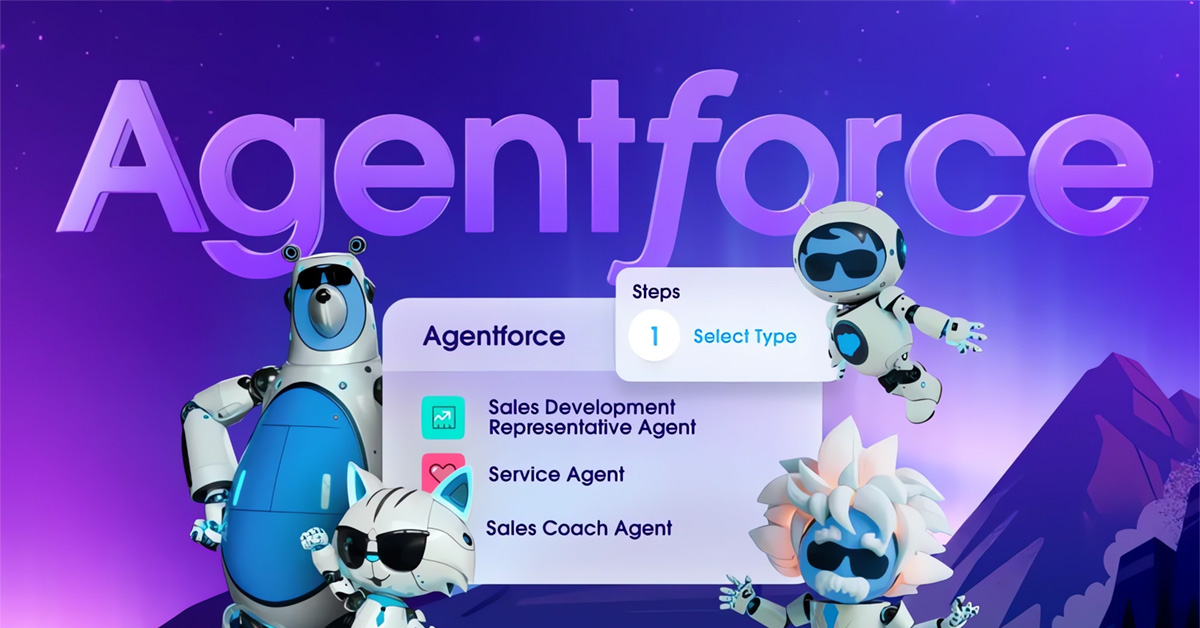
Introducing Salesforce Agentforce
50+ Important Salesforce Agentforce Certification Questions
50+ Important Salesforce Agentforce Certification Questions