Recent studies published in Chinese engineering journals showcase significant strides in unmanned aerial vehicle (UAV) control. Researchers have refined dynamic pose tracking for coaxial octrotors and introduced an improved proximity law for coaxial twin‑rotors, offering sharper maneuverability and tighter flight envelope management.
What’s New in Coaxial UAV Technology?
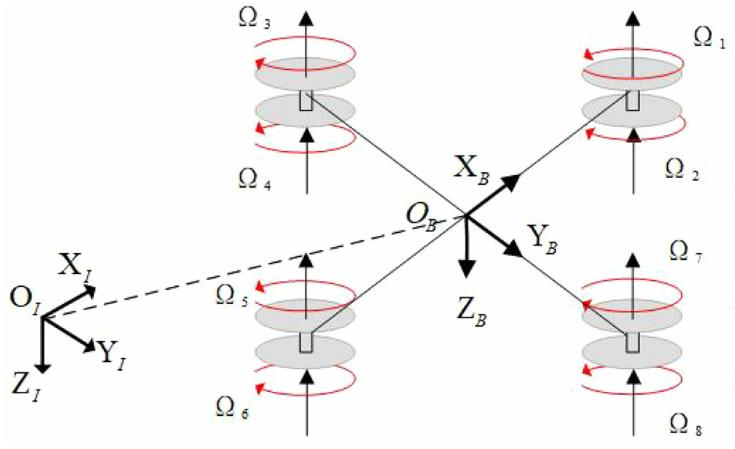
The first paper, titled “Finite‑Time Dynamic Pose Tracking Control System for a Coaxial Octrotor UAV Based on Torsional Dynamics,” proposes a control architecture that guarantees convergence of position, velocity, and attitude within a predetermined finite time. By incorporating torsional dynamics—normally neglected in traditional quadrotor models—engineers can predict and compensate for twisting moments that arise during aggressive maneuvers.
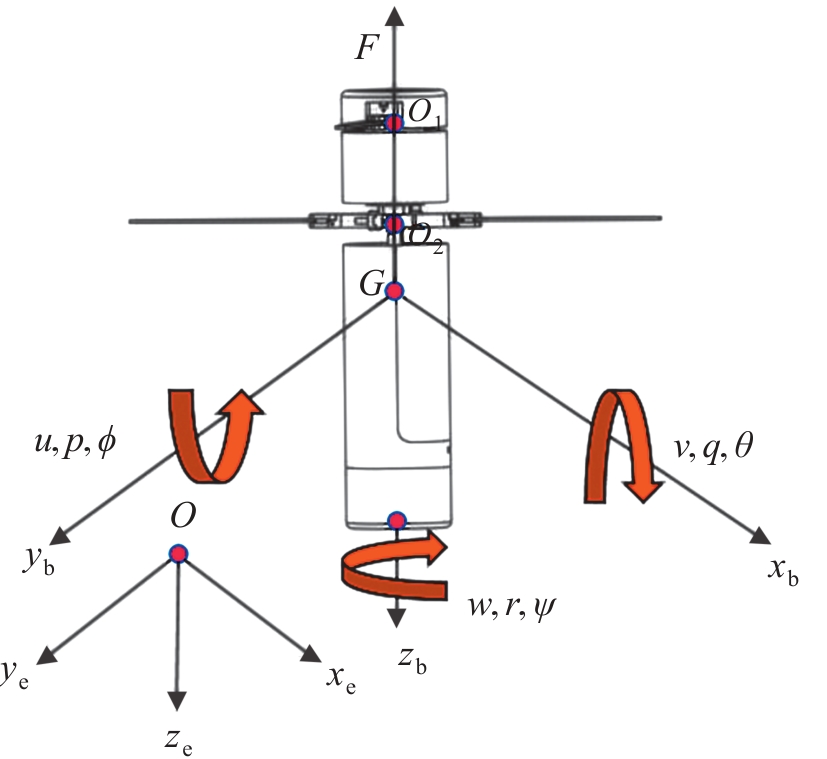
The second study, “Control Research of a Coaxial Double‑Rotor UAV Based on an Improved Approach Law,” focuses on a twin‑rotor design. The researchers modified the classic proximity law—how the control system reacts when the UAV approaches a target—allowing smoother approach trajectories and reduced overshoot.
Why These Developments Matter
Coaxial designs, where two counter‑rotating rotors are stacked vertically, reduce the need for a tail rotor and lower weight. However, they introduce complex aerodynamic interactions, especially during high‑speed turns or rapid altitude changes. The new control strategies address these challenges by:
- Finite‑time convergence: Guarantees that the UAV reaches its desired state in a bounded interval, enhancing safety for missions that require immediate response.
- Improved proximity handling: Enables twin‑rotors to approach targets—such as delivery points or inspection sites—without excessive oscillation, improving precision and energy efficiency.
- Robustness to disturbances: The models account for external forces like wind gusts, making the UAVs more reliable in unpredictable environments.
Implications for Industry and Beyond
These research outcomes have a clear payoff for commercial and governmental drone applications:
- Delivery services: Faster, more accurate positioning reduces package drop errors, especially in dense urban landscapes.
- Infrastructure inspection: Twin‑rotor drones with refined proximity laws can navigate tight spaces around towers or bridges, gathering high‑resolution data without collateral damage.
- Search & rescue: Octrotors with finite‑time control can cover larger search areas quickly, improving response times during emergencies.
While the studies are still in the academic phase, prototype tests have demonstrated the feasibility of these control methods under simulated flight conditions. The next steps involve scaling the algorithms for real‑world flight and integrating them into existing UAV platforms.
Looking Forward
As the UAV market continues to expand, the need for advanced control systems that balance agility, safety, and energy efficiency grows. The coaxial octrotor and twin‑rotor research presented here lay a strong foundation for future drones that can navigate complex airspaces with precision reminiscent of a cartoon hero—an apt visual parallel for the Jackie Chan Adventures cartoon cast, who always manage to get the job done with style and finesse.
一种微型全矢量控制的共轴双旋翼控制系统及其控制方法

一种微型全矢量控制的共轴双旋翼控制系统及其控制方法
一种全向升力矢量共轴双旋翼装置的制作方法

一种全向升力矢量共轴双旋翼装置的制作方法
一种两舵机直驱共轴旋翼系统及控制策略的制作方法

一种两舵机直驱共轴旋翼系统及控制策略的制作方法